The brief
A generation ship keeps people alive for generations on the way to another star. Its designers are architects, engineers and anthropologists, but no digital experience designers. In Experience Design 4 that was our job: pick one of ten themes, one “how might we”, and go through the second half of the Double Diamond (ideate, prototype, test) towards a prototype that combines something digital with something physical.
We chose art & entertainment: how might we create an environment that stimulates creativity to make art and entertainment?
Define
On a ship built for survival, creativity comes last, and boredom and mental fatigue creep in. We mapped the problem with an Ishikawa diagram, an issue tree and a scoping canvas, and turned our research into three design principles: Trusted (warm and inviting, so people come back), Unlimited (no talent held back by scarce materials) and Together (creativity as a shared experience).
The concept
Creative Cabins: 100+ digital studios spread across the ship. You book one alone or with friends, get a smart wristband at the door, and tune the room to you: light, colour, music, temperature and even gravity. Inside, you work on a large smart canvas. When you’re done, you choose what happens to your work: keep it, share it with friends, or show it on the cabin’s outer wall and screens across the ship, building an archive that each generation leaves for the next.
We deliberately went fully digital: clay, paint and paper run out on a ship with limited supplies, which clashes with Unlimited.
Prototype
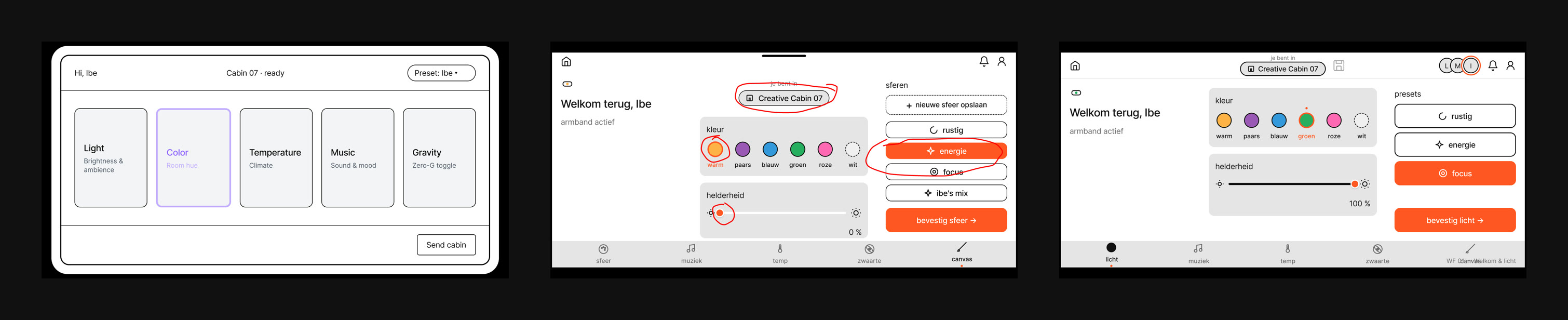
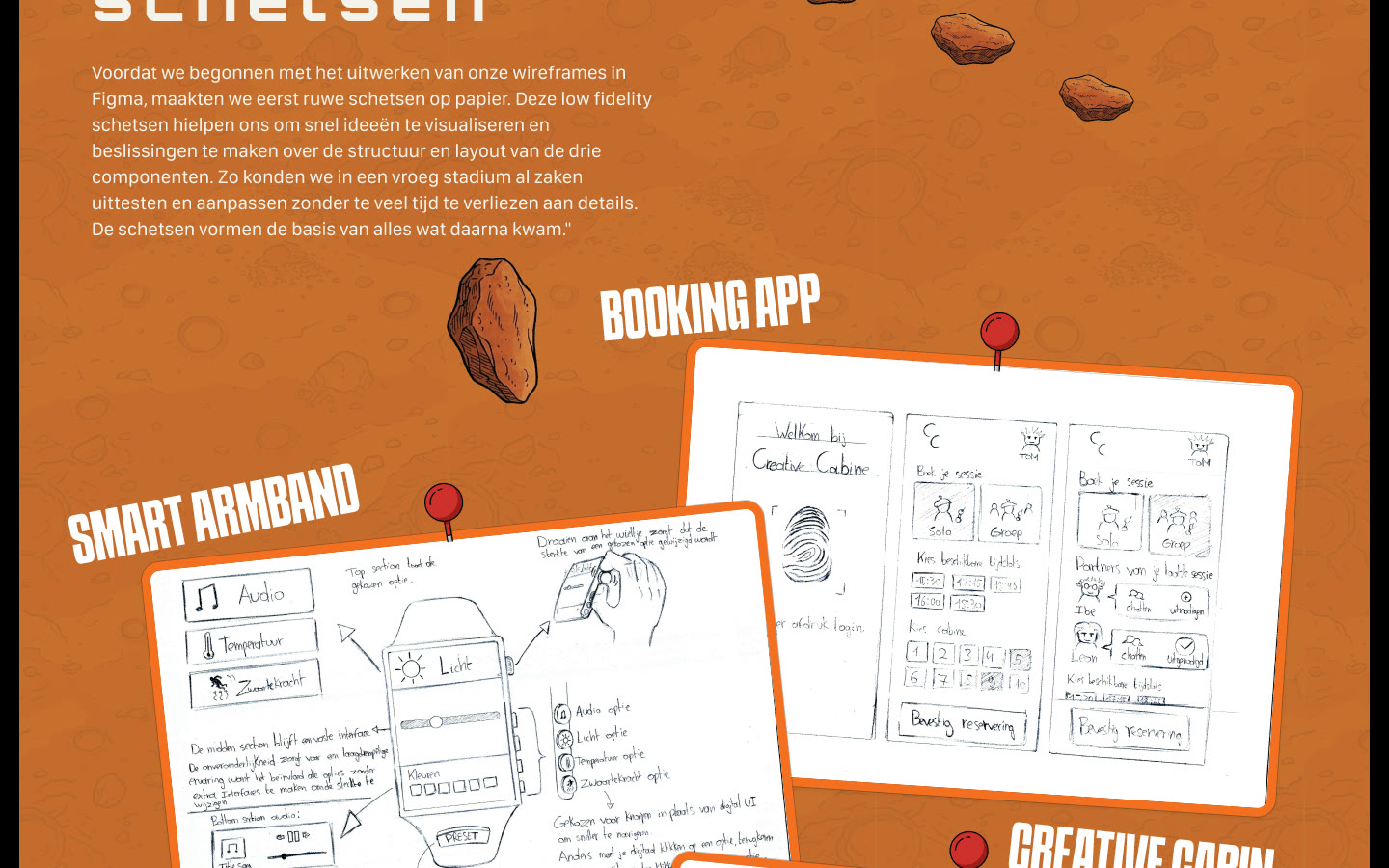
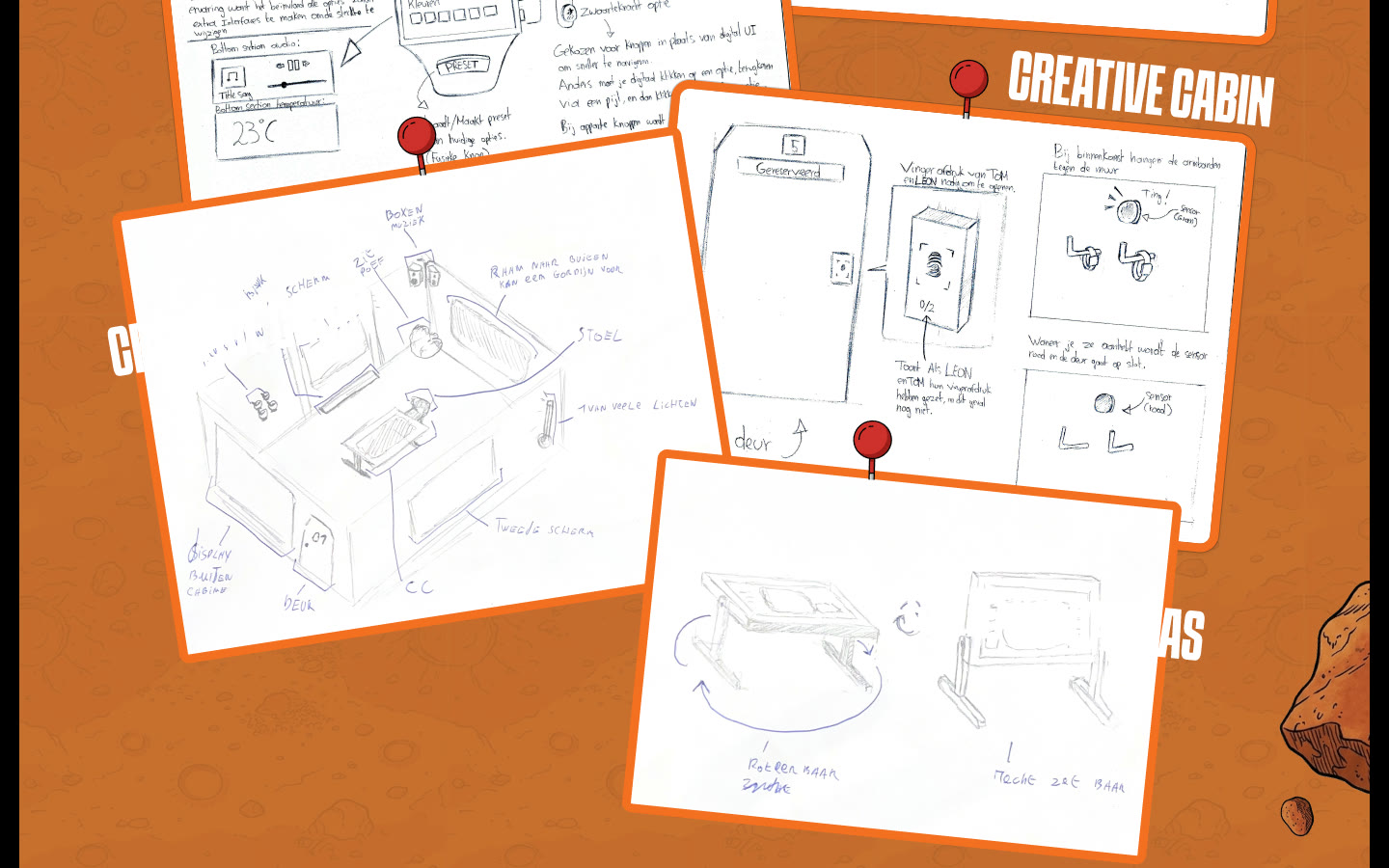
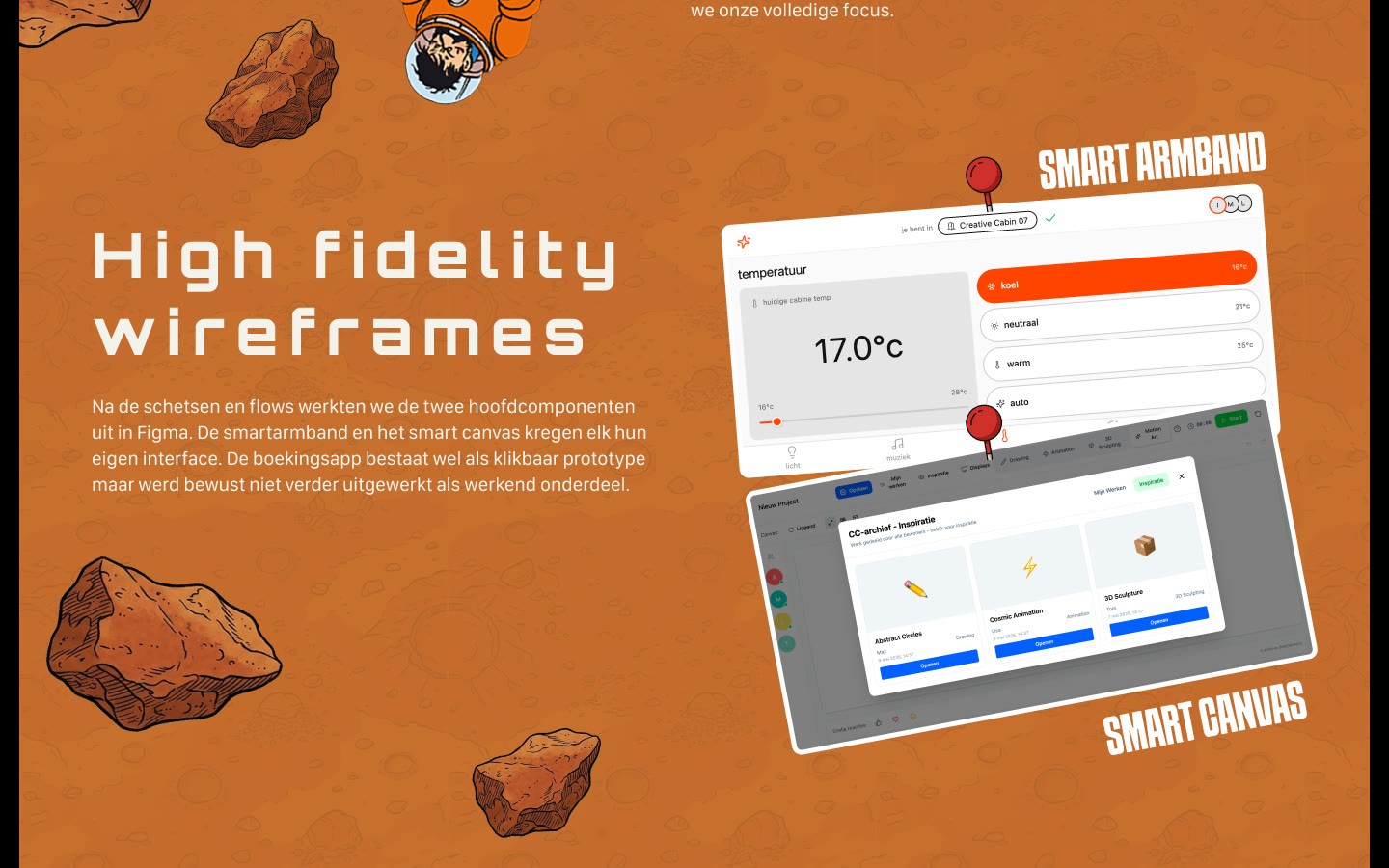
We sketched the three parts (booking app, wristband, cabin), wrote user stories and a storyboard around a persona, and mapped the full user flow in five phases. Then we chose focus over completeness: the wristband and the smart canvas became high-fidelity Figma prototypes, the booking app stayed a clickable flow.
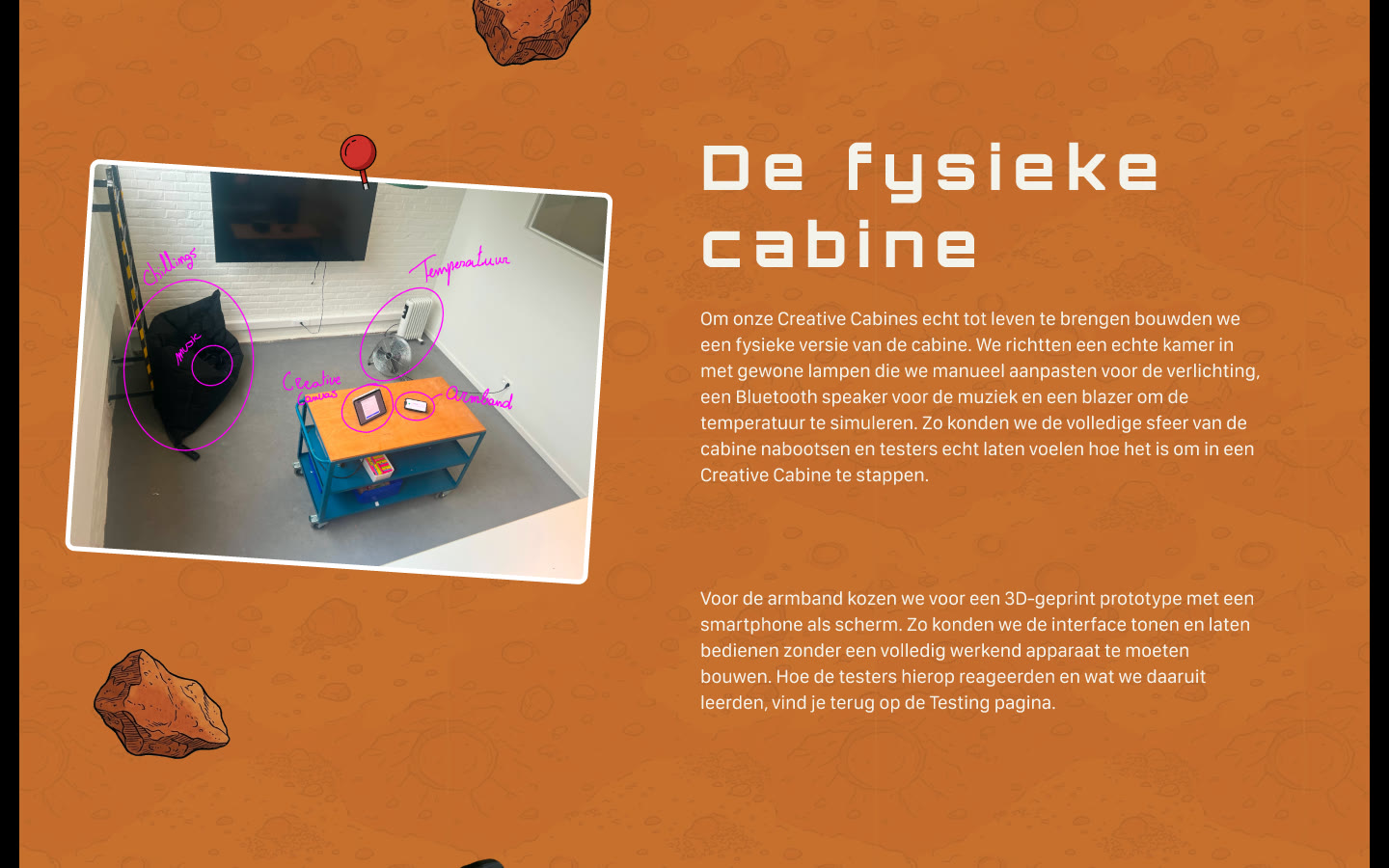
To test it for real, we built a physical cabin: a room with lamps we adjusted live, a Bluetooth speaker and a fan, and a 3D-printed wristband holder with a phone as its screen.
Testing & iterating
After milestone 2 our lecturer asked the key question: why a wristband, and not just the app? We answered it on three grounds: it’s always at hand without breaking your flow, it’s a dedicated device without notifications pulling you away, and putting it on is a small ritual that makes you part of the room.
We then tested the booking app, the wristband and the canvas with scripted tasks and think-aloud sessions. Most testers found the wristband intuitive, but saving a preset needed clearer feedback, and a blank canvas turned out to be a barrier to start. Clearer buttons, feedback after every action and a small inspiration prompt were our next steps.